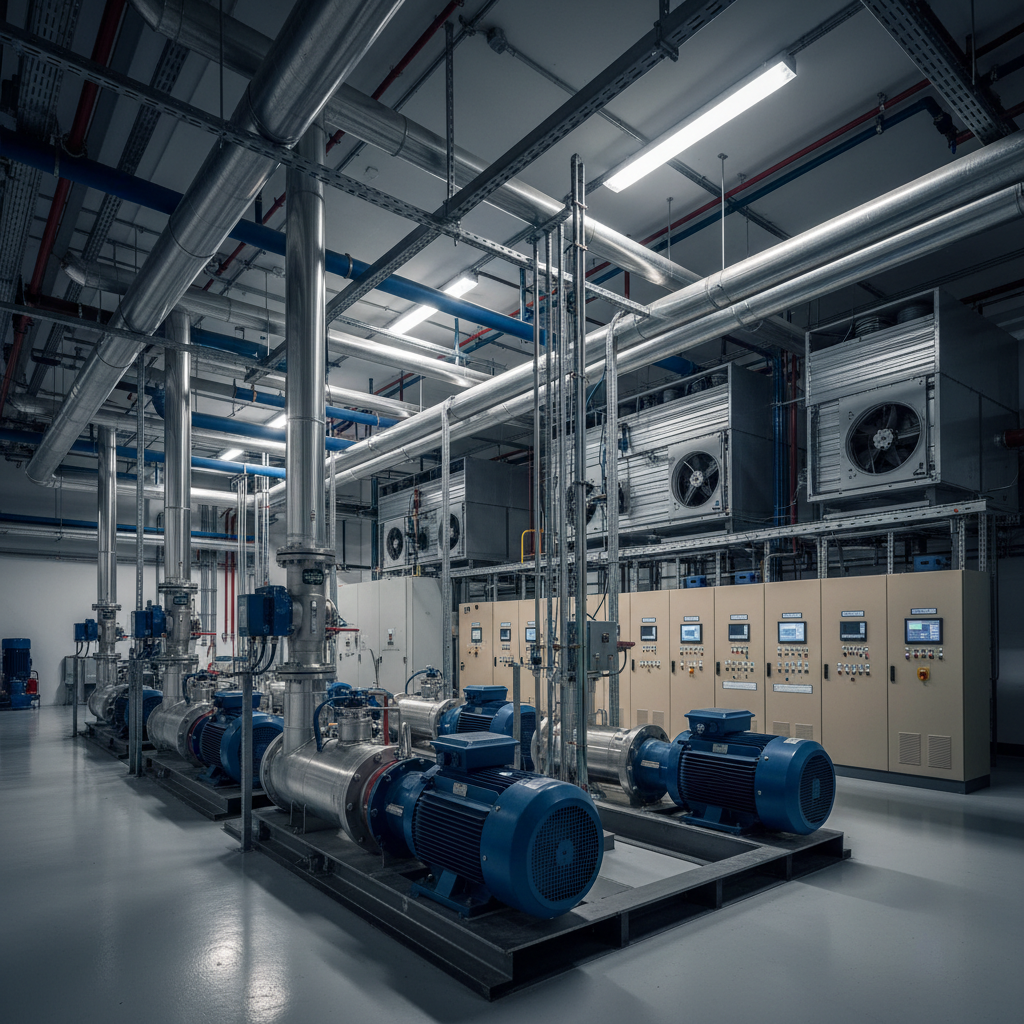
Energy InfrastructureMonitoring
Operational visibility and predictive monitoring for mission critical facility infrastructure and energy systems.
Why Energy Infrastructure Reliability Matters
Facility operations depend on infrastructure systems that most teams rarely see — chilled water plants in basement mechanical rooms, air handling units on rooftops, electrical distribution equipment in locked rooms, and backup generators that may not run for months at a time.
When these systems fail, the impact is immediate and facility-wide. An HVAC failure affects every occupant. A chilled water pump failure cascades into cooling loss across multiple systems simultaneously. An electrical fault can impact entire production floors or critical data environments.
Infrastructure failures rarely occur without warning. They develop gradually — through vibration, heat, and changing operational behavior. The challenge is that these signals often go undetected because the systems operate continuously out of direct observation.
Operational Impact of Infrastructure Failure
Most Infrastructure Failures Develop Before Disruption Occurs
Infrastructure failures rarely arrive without advance warning. Bearing wear develops over weeks and months. Electrical connections degrade incrementally. Cooling inefficiency builds gradually before it becomes a visible problem.
The challenge in most facilities is not that these signals are absent — it is that the systems generating them operate continuously and out of direct sight. Without operational visibility tools capturing and trending these signals, developing issues remain invisible until operations are already impacted.
Critical Systems Facilities Depend On Every Day
These infrastructure systems run continuously in the background — invisible until they stop. Understanding their failure modes and warning signs is the foundation of effective predictive maintenance.
HVAC Infrastructure
Maintains environmental conditions across the entire facility — temperature, humidity, and air quality.
Bearing wear, motor overheating, drive belt degradation, coil fouling
Rising motor current, increasing vibration, reduced airflow, temperature drift
Loss of environmental control, occupant disruption, production quality risk
Chill Water Systems
Provides chilled water to process cooling, comfort cooling, and server cooling infrastructure.
Pump bearing failure, seal leaks, impeller wear, refrigerant issues
Supply temperature rise, pressure differential changes, increasing pump vibration
Cooling loss across multiple systems simultaneously — cascading facility impact
Pumps & Motors
Circulate water, chemicals, and process fluids throughout facility systems continuously.
Bearing degradation, seal wear, cavitation, impeller damage, misalignment
Increasing vibration, abnormal noise, rising motor temperature, current draw changes
Process fluid loss, system pressure failure, downstream equipment damage
Electrical Distribution
Delivers power reliably across the facility to all operational systems and equipment.
Panel overheating, connection degradation, harmonic distortion, insulation aging
Hot spots, tripping breakers, flickering loads, increasing panel temperatures
Partial or complete power loss, equipment damage, production stoppage
Generators & Backup Power
Provides continuity of power during utility disruptions for critical systems.
Starting failure, fuel system issues, coolant system degradation, alternator wear
Extended start times, voltage irregularities, coolant temperature rise
Backup power unavailable during utility event — critical systems go dark
Cooling Towers & Air Handlers
Remove heat from process and HVAC systems, maintaining thermal balance across the facility.
Fan bearing failure, drift eliminator fouling, water treatment issues, fill degradation
Approach temperature rise, increasing fan vibration, water quality drift
Thermal rejection capacity loss — cascading system temperature rise
Why Operational Visibility Is Becoming Increasingly Important
Facilities that move from reactive maintenance to continuous operational visibility gain the ability to plan — rather than respond. The shift is from emergency reaction to informed, proactive infrastructure management.
Vibration Monitoring
Continuous triaxial vibration sensing detects bearing wear, motor imbalance, misalignment, and mechanical looseness in pumps, motors, fans, and drives across all infrastructure systems.
Temperature Monitoring
Surface temperature monitoring identifies heat signatures on motors, electrical panels, and mechanical equipment associated with overloading, lubrication failure, and electrical degradation.
Operational Trend Analysis
Long-term condition trending establishes equipment baselines and automatically flags deviations — enabling maintenance teams to identify developing issues weeks before failure.
Wireless Infrastructure
Non-invasive wireless sensor deployment requires no system modifications or production shutdowns. Sensors attach directly to equipment housings in minutes.
Real-Time Alerts
Configurable alert thresholds notify maintenance teams when critical equipment condition crosses defined parameters — prioritizing the assets with the highest operational dependency.
Maintenance Planning
When developing issues are detected early, maintenance teams can schedule planned interventions during low-impact windows rather than mobilizing emergency response during peak operations.
A Practical Infrastructure Reliability Strategy Facilities Can Implement Immediately
Improving infrastructure reliability does not always require new technology. These practical steps help facility and maintenance teams build better operational visibility today.
Identify Your Most Critical Assets
Map which infrastructure systems, if they failed, would immediately halt operations or create the largest cascading impact.
Document Recurring Equipment Issues
Review maintenance history for repeat service calls, component replacements, and recurring faults. Patterns often reveal chronic underlying issues.
Weekly Infrastructure Walkdowns
Conduct structured weekly walkthroughs of mechanical rooms, electrical rooms, and AHU spaces — listening, observing temperature, and noting changes.
Monitor Vibration And Temperature Trends
Even without formal monitoring systems, tracking surface temperatures and listening for vibration changes provides early indication of degrading equipment.
Identify Single Points Of Failure
Assess where your infrastructure has no redundancy. These single-point systems represent the highest risk and warrant the highest monitoring priority.
Evaluate Equipment Aging
Review the age and service history of critical assets. Aging equipment that is approaching end-of-life requires more frequent attention and proactive replacement planning.
Industries Where Infrastructure Reliability Is Mission Critical
Operational continuity in these environments depends directly on the reliable, continuous performance of infrastructure systems that rarely receive the visibility they require.
Data Centers
Every degree of cooling inefficiency is a risk event. HVAC and chilled water reliability is directly tied to uptime SLAs.
Manufacturing
Process cooling, compressed air, and environmental systems directly support production quality and equipment performance.
Warehousing & Distribution
Temperature-controlled storage environments depend entirely on refrigeration and HVAC reliability for product integrity.
Airports
Passenger terminals depend on continuous HVAC, backup power, and electrical distribution across mission critical 24/7 environments.
Food Processing
Cold storage, process cooling, and sanitation systems are production-critical. Thermal failures directly threaten product safety.
Healthcare
Hospital infrastructure — HVAC, emergency power, medical gas systems — requires extreme reliability with no tolerance for unplanned downtime.
Modern Infrastructure Monitoring Is Moving From Reactive To Predictive
The shift from reactive maintenance to continuous operational intelligence is increasingly the standard for facilities that cannot afford unplanned infrastructure downtime.
Energy Infrastructure Monitoring — Common Questions
Answers to common questions about infrastructure monitoring, predictive maintenance, and operational visibility.
Related Resources
Operational intelligence resources relevant to facility infrastructure reliability.
Operational Visibility Helps Facilities Reduce
Infrastructure Risk Before Downtime Occurs
7G Solutions helps facilities improve infrastructure reliability, predictive maintenance visibility, and operational continuity across mission critical environments.