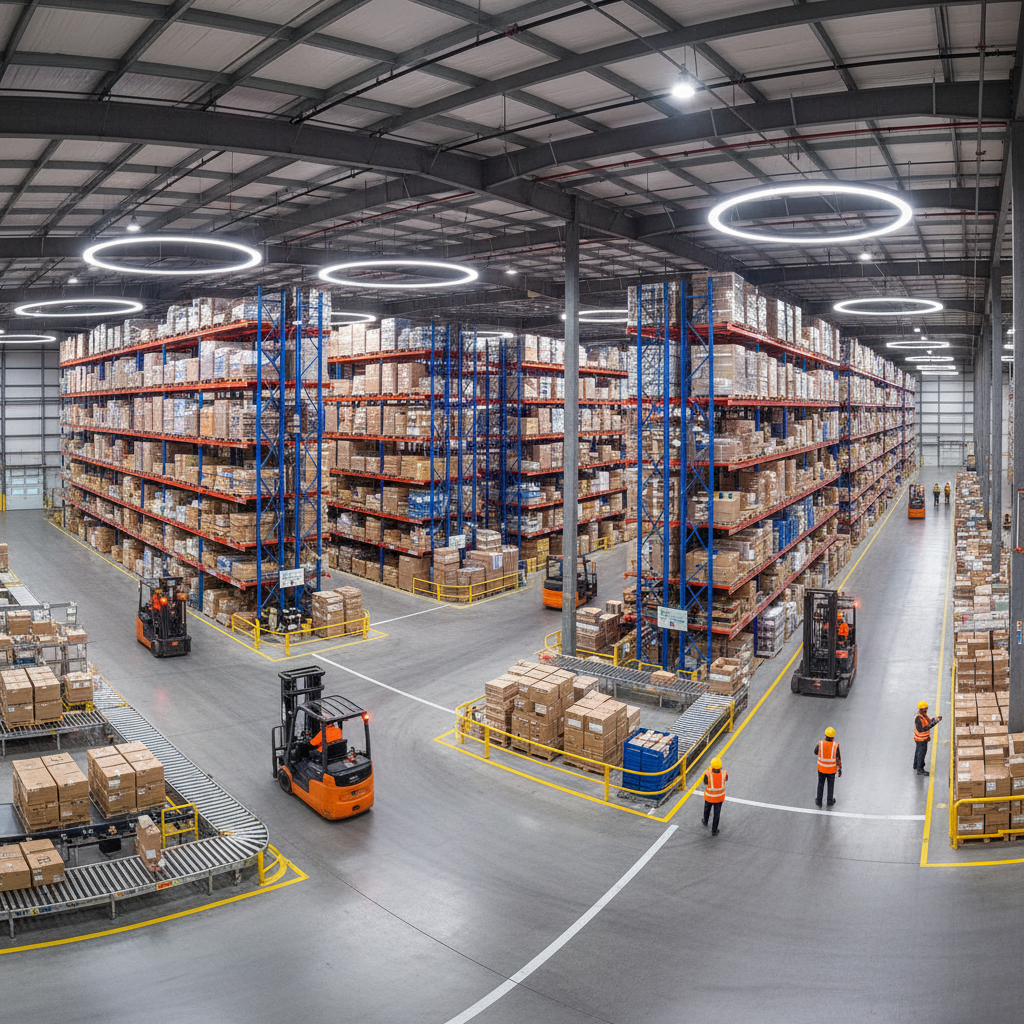
Workplace SafetyMonitoring
Operational visibility and real-time safety intelligence for industrial facilities, warehouses, and mission critical operations.
Why Industrial Workplace Safety Is Becoming More Complex
Industrial facilities are moving faster. Forklift traffic density is increasing, operational throughput expectations are rising, and mixed pedestrian-vehicle environments are more congested than ever. Labor shortages mean fewer supervisors are overseeing more complex operational zones simultaneously.
Warehouse automation growth adds new vehicle types — autonomous carts, tuggers, elevated pickers — that interact with pedestrian traffic in ways traditional safety programs were not designed to manage.
Traditional safety methods — signage, floor markings, mirrors, and manual observation — remain essential, but they operate on a passive model. They rely on awareness that is already present. In complex, high-speed industrial environments, real-time operational intelligence is becoming an increasingly critical layer.
Factors Increasing Operational Safety Complexity
Forklift And Pedestrian Safety Is A Visibility Problem
Most forklift incidents do not occur because operators are reckless or pedestrians are careless. They occur because both parties are operating in environments where sightlines are limited, movement is fast, and real-time awareness of each other's location simply does not exist until it is too late.
Blind corners at racking ends, aisle intersections, doorways, and loading dock approaches are consistent incident locations across virtually every facility type. These are predictable risk points — but without real-time location awareness, they remain difficult to manage operationally.
When operators have real-time proximity awareness of pedestrians — and when pedestrians receive alerts when a forklift approaches around a blind corner — incidents that would otherwise be unavoidable become avoidable.
How Real-Time Safety Monitoring Improves Operational Awareness
Modern workplace safety monitoring uses RTLS technologies to transform reactive safety programs into proactive operational intelligence platforms. Facilities gain continuous, data-driven visibility into risk conditions before incidents occur.
Real-Time Location Tracking
Wireless tags on forklifts and worn by personnel transmit continuous position data, enabling the system to know exactly where every tagged asset and person is within the facility at all times.
Geo-Fencing & Zone Management
Define virtual safety boundaries within your facility. When tagged forklifts or pedestrians enter restricted zones or cross safety buffer boundaries, configurable alerts are triggered automatically.
Proximity Alerts
When a forklift approaches a tagged pedestrian within a configured distance threshold, both parties receive alerts — giving the operator and pedestrian real-time awareness before visual contact is possible.
Operational Heat Mapping
Visualize where forklift traffic and pedestrian movement concentrate across the facility. Heat maps reveal congestion patterns, high-frequency risk zones, and routing inefficiencies invisible to manual observation.
Safety Analytics & Trends
Track near-miss frequency, proximity event patterns, zone compliance, and operational behavior trends over time. Data-driven visibility enables continuous safety improvement rather than reactive response.
Incident Data & Reporting
When incidents or near-miss events occur, timestamped location data provides an objective operational record — enabling root cause analysis, safety reviews, and process improvement with factual evidence.
Modern Workplace Safety Is Moving From Reactive To Predictive
Safety programs are increasingly integrated into operational workflows — shifting from passive risk controls to active, data-driven operational intelligence that reduces risk before incidents occur.
High-Risk Industrial Environments
Workplace safety challenges manifest differently across industrial environments — but the underlying visibility and awareness gaps are consistent.
Warehousing & Distribution
High-volume forklift traffic, pedestrian order pickers, and loading dock congestion create complex mixed-traffic environments with significant visibility limitations.
Manufacturing
Moving materials between production lines, compressed operational space, and rotating shift schedules create chronic congestion risk in active production areas.
Airports & Baggage Handling
Ground support equipment, baggage tugs, and pedestrian staff operating in congested terminal areas under high time pressure and limited sightlines.
Food Processing
Sanitation schedules, pedestrian traffic from processing lines, and forklift movements through narrow cold-store and staging corridors create ongoing proximity risk.
Heavy Industrial
Mining, cement, and aggregate facilities combine large equipment, blind infrastructure, dusty visibility conditions, and remote operational areas with high incident potential.
Loading Dock Operations
Reverse movements, poor lighting, pedestrian crossings, and simultaneous inbound and outbound traffic make loading docks one of the highest-risk operational zones in any facility.
A Practical Workplace Safety Strategy Facilities Can Implement Immediately
Improving workplace safety visibility does not always require new technology. These practical steps help facilities build a stronger operational safety foundation immediately.
Map Forklift Traffic Patterns
Document the primary forklift routes across your facility during peak operations. Identify where routes intersect with pedestrian zones and where sightlines are limited.
Identify High-Risk Intersections
Walk your facility specifically looking for blind corners, aisle intersections, racking ends, and doorways where forklift and pedestrian paths regularly cross.
Document Near-Miss Areas
Establish a simple near-miss reporting process. Most facilities find near-misses concentrate at a small number of predictable locations.
Evaluate Loading Dock Congestion
Assess loading dock operations during peak periods. Identify where pedestrian traffic, inbound freight, and forklift movements overlap simultaneously.
Weekly Safety Walkdowns
Conduct structured weekly walkdowns focused specifically on traffic flow, pedestrian separation, and visibility conditions — separate from general safety audits.
Improve Line-Of-Sight Where Possible
Identify and eliminate or reposition racking, equipment, or materials that create blind corners. Convex mirrors are a simple, immediate improvement at low cost.
Operational Visibility Improves Both Safety And Efficiency
Safety monitoring data is operational data. When facilities understand where forklift congestion concentrates, where pedestrian flows cross vehicle routes, and how operational movement patterns develop throughout a shift, that information has value beyond safety management.
Traffic flow improvements, route optimization, congestion reduction, labor coordination improvements, and operational planning all benefit from the same visibility data that drives safety improvements. The investment in operational awareness pays dividends across multiple dimensions of facility performance simultaneously.
Traffic Flow Optimization
Understand where congestion develops and redesign routes, timing, or infrastructure to reduce it.
Incident Root Cause Analysis
Objective location data enables factual post-incident review and targeted process improvement.
Labor Coordination
Operational visibility data helps supervisors understand movement patterns and coordinate labor more effectively during peak periods.
Operational Planning
Historical movement and congestion data informs facility layout decisions, operational scheduling, and capacity planning.
Workplace Safety Monitoring — Common Questions
Answers to common operational and technical questions about industrial workplace safety monitoring.
Related Resources
Operational resources relevant to industrial facilities managing safety and reliability.
Operational Visibility Helps Reduce
Workplace Risk Before Incidents Occur
7G Solutions helps facilities improve workplace safety, operational awareness, and real-time visibility across complex industrial environments.