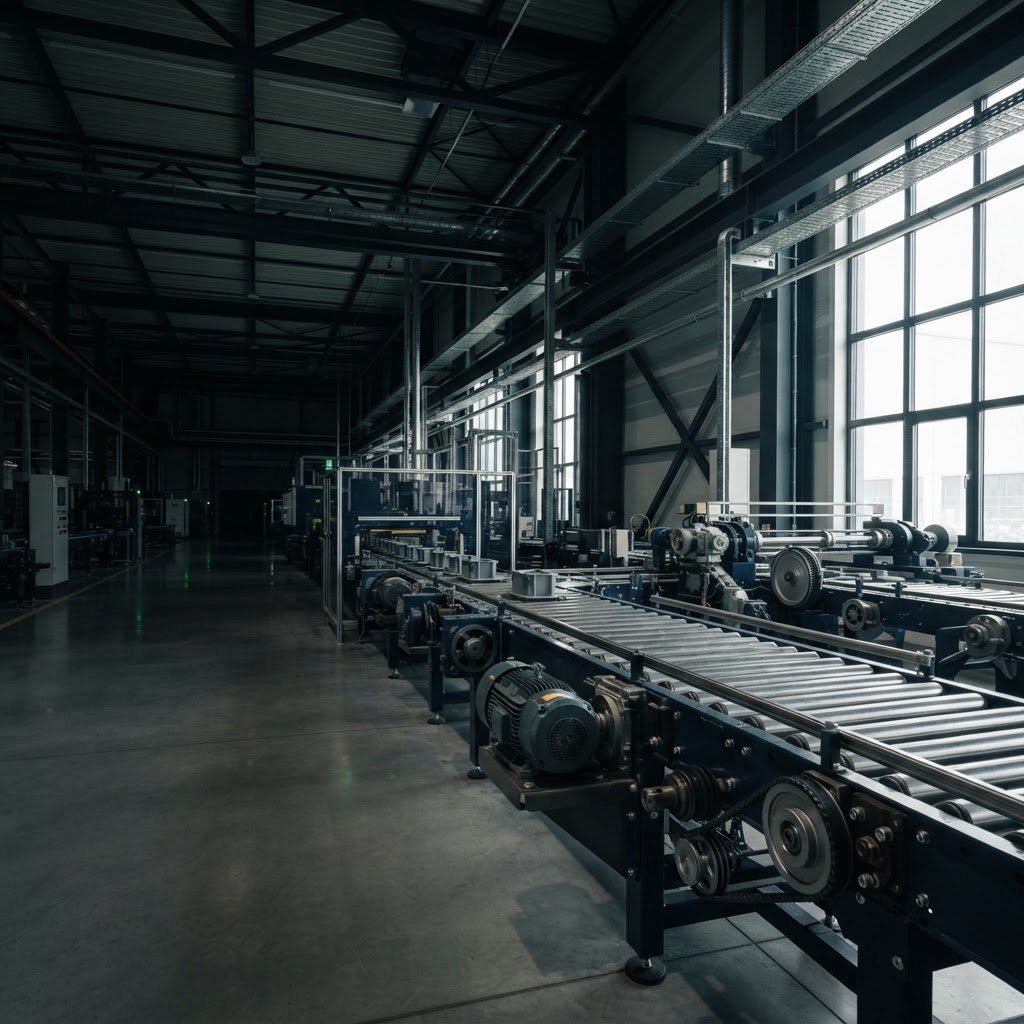
Detect Earlier. Understand What It Means. Act Before Production Stops.
7G helps maintenance and operations teams turn equipment condition data into practical intelligence so they can identify developing problems, understand urgency, prioritize inspections and intervene before production is disrupted.
Where maintenance teams struggle today
Most equipment problems are noticed only after performance has already degraded. Without continuous condition intelligence, teams work reactively, with too little context and too little time.
- Equipment problems are discovered only after performance has deteriorated
- Maintenance teams receive alerts without enough diagnostic context
- Technicians spend too much time troubleshooting
- Critical work is difficult to prioritize
- Repairs are completed without confirming that the condition improved
- Equipment history and institutional knowledge are lost as personnel change
Asset Intelligence helps your team answer
Instead of a raw alert, 7G turns condition data into practical questions your team can act on:
Better information makes good people more effective.
What changes for your operation
Representative capabilities
7G supports maintenance teams — it does not replace them. Human judgment remains central to diagnosis and repair decisions, and not every condition can be diagnosed autonomously.
A proof-of-value path, not a leap of faith
We begin with the single asset or system where a failure would hurt most, then expand once value is proven.
Identify the highest-value problem
Select the conveyor, motor or rotating asset whose failure would cause the most production disruption.
Deploy the appropriate technology
Install wireless vibration, temperature and acoustic sensors on the selected assets.
Establish the baseline
Capture normal operating behavior so developing changes are recognizable.
Measure the result
Track early warnings, maintenance actions and post-repair condition verification.
Expand from demonstrated value
Extend monitoring to additional critical assets based on proven outcomes.
Go deeper into asset intelligence
Condition-Monitoring Solutions
Wireless sensing, vibration analysis and trend visibility for critical assets.
ExploreConveyor Reliability
Monitoring, vibration analysis and downtime prevention for conveyor and sortation systems.
ExploreHeavy Industrial
Conveyor and bulk-material handling reliability for cement, mining and heavy industry.
ExploreReliability Intelligence
Articles and operational insights on predictive monitoring and maintenance strategy.
ExploreAirport Baggage Conveyor Reliability
Baggage handling conveyor uptime and predictive monitoring.
ExploreHidden Cost of Unplanned Downtime
Why reactive maintenance costs more than the repair.
ExploreExplore the other 7G pillars
Identify a Critical Asset Opportunity
Start by monitoring the one asset whose failure would disrupt production most. Validate value quickly, then expand from demonstrated results.