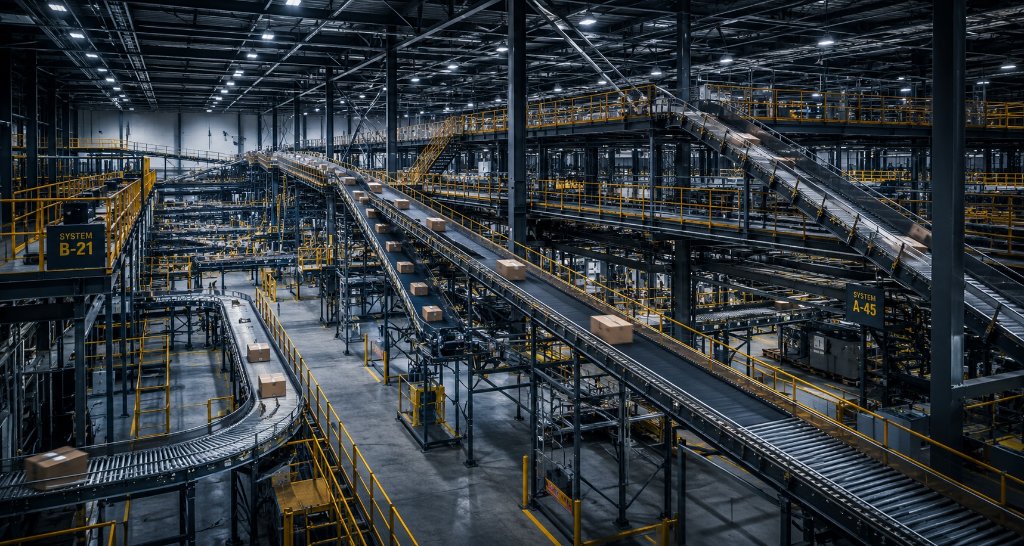
Conveyor Monitoring
& Reliability
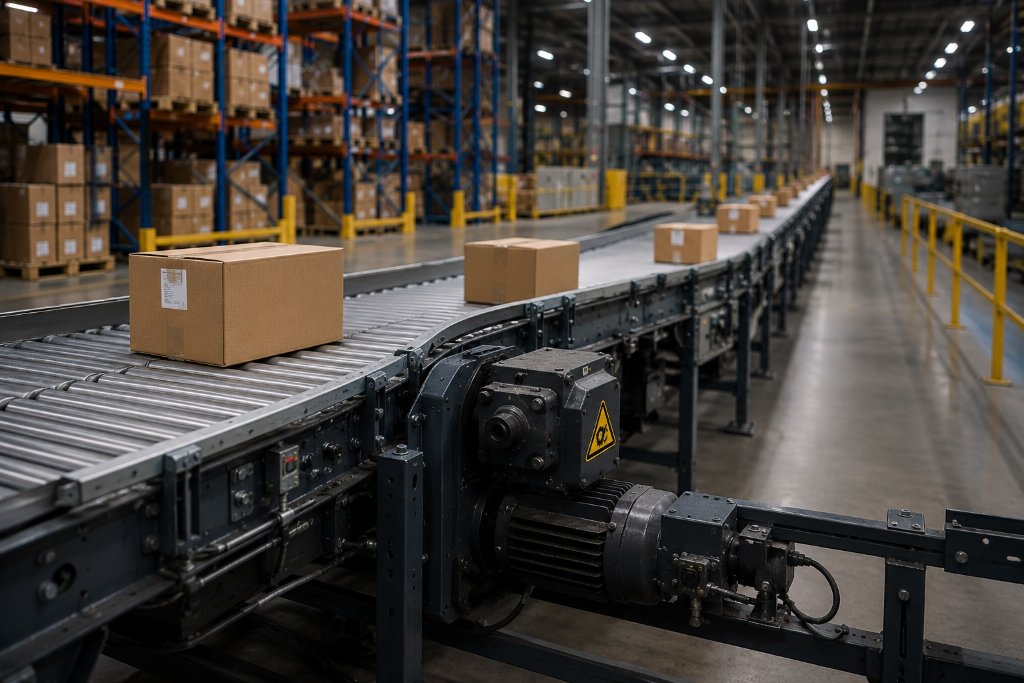
Reduce unplanned conveyor downtime through continuous operational visibility, predictive monitoring, and early failure detection.
Why Conveyor Downtime Is So Expensive
Conveyor downtime rarely costs only the price of the failed part. The direct repair expense is usually the smallest line item. What follows an unplanned stoppage is where the real financial exposure accumulates.
Lost Throughput
Every hour a production or sortation conveyor is stopped represents product that didn't ship, orders that weren't fulfilled, and revenue that cannot be recovered.
Idle Labor
Downstream workers and equipment idle when a conveyor feeding their operation goes down. In large facilities, this can represent dozens of labor hours lost per incident.
Emergency Response
After-hours callouts, expedited parts shipping, and premium contractor rates make emergency repairs significantly more expensive than planned maintenance interventions.
Missed Shipping Windows
In distribution, airports, and logistics, missed cutoff times have downstream consequences — late deliveries, customer penalties, and service commitment failures.
Secondary Equipment Damage
A seized bearing or failed drive can damage adjacent belts, shafts, and structural components. What began as a $200 bearing can quickly become a $15,000 repair event.
Production Disruption
In manufacturing environments, a single conveyor failure can stop an entire production line and cascade idle time across multiple work cells.
Overtime Costs
Recovery from downtime events frequently requires overtime shifts to restore production output — adding further to the total cost of the incident.
Customer Impact
In food processing, parcel, and e-commerce operations, conveyor failures translate directly into customer-visible service failures and potential contract risk.
Industry context: In warehousing and distribution, unplanned conveyor downtime during peak periods has been estimated to cost between $5,000 and $20,000 per hour depending on facility throughput. In airport baggage systems, failures can cascade into aircraft delays with compounding cost and reputational impact. In food processing, unplanned stoppages carry both financial and food safety implications.
Most Conveyor Failures Begin Before the Stoppage
The majority of conveyor failures do not happen without warning. They develop gradually over days, weeks, or months — producing detectable signals that go unnoticed until the equipment stops.
The challenge is that these early indicators are often subtle, intermittent, or only visible during close physical inspection. Without a structured approach to observation and documentation, the warning signs pass unnoticed until the failure becomes unavoidable.
What Maintenance Teams Should Look For During Weekly Conveyor Walkdowns
A practical inspection guide that requires no equipment purchase.
Listen for new grinding, squealing, clicking, or rattling that wasn't present during the previous inspection. Changes in sound are often the first detectable indicator of bearing or roller deterioration.
Use the back of your hand near (not on) bearing housings and motor surfaces. Temperatures that feel noticeably hotter than normal or that are rising week-over-week warrant documentation and follow-up.
Briefly touch bearing housings and motor frames while running. Roughness or harshness that wasn't present previously can indicate developing mechanical issues.
Observe belt centering across the full conveyor length. Belts that drift toward one edge or require frequent manual correction often indicate misalignment developing in pulleys or idlers.
Check for dry, contaminated, or missing lubrication on bearings and chain drives. Also watch for excess grease pushed out under pressure — a sign of over-lubrication or a failed seal.
Log every observation — even minor ones — with a date. Patterns visible across multiple weeks are far more informative than any single observation in isolation.
Common Conveyor Failure Points
A quick field reference for maintenance and reliability teams.
Bearings
Fatigue, spalling, lubrication breakdown
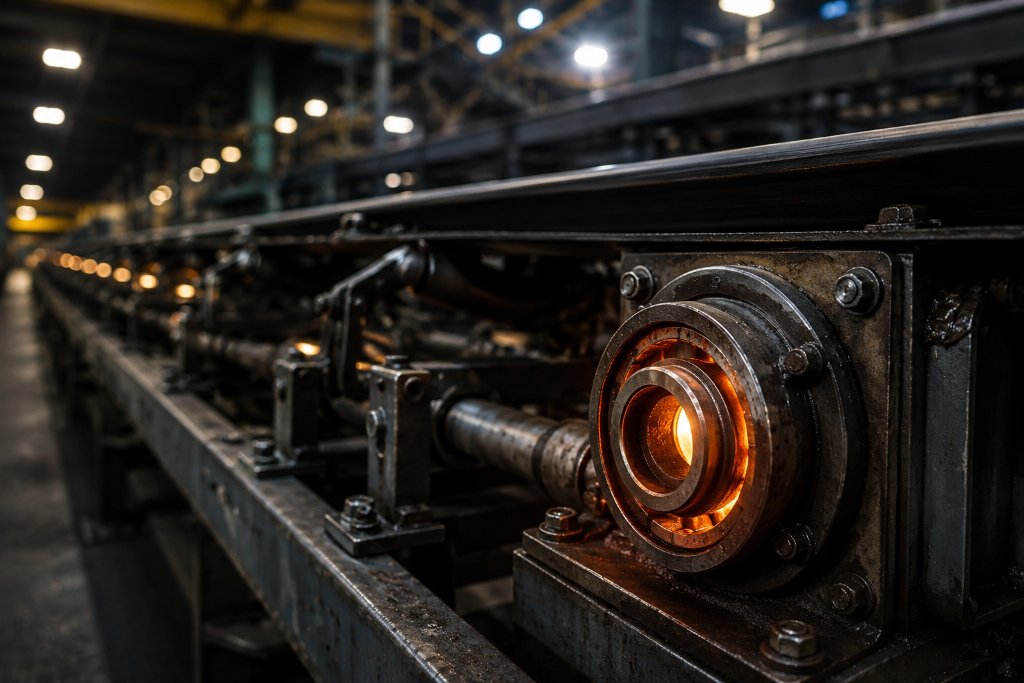
Increasing vibration amplitude, rising surface temperature, audible grinding or squealing
Seized conveyor, belt stoppage, secondary shaft and frame damage
Motors
Overheating, winding degradation, bearing wear
Elevated motor temperature, vibration changes, increased amperage draw
Unplanned shutdown, potential fire risk in high-dust environments
Pulleys
Misalignment, lagging wear, bearing failure
Belt tracking issues, vibration, visible wear on lagging surface
Belt damage, material spillage, structural stress on conveyor frame
Gearboxes
Gear wear, oil degradation, bearing failure
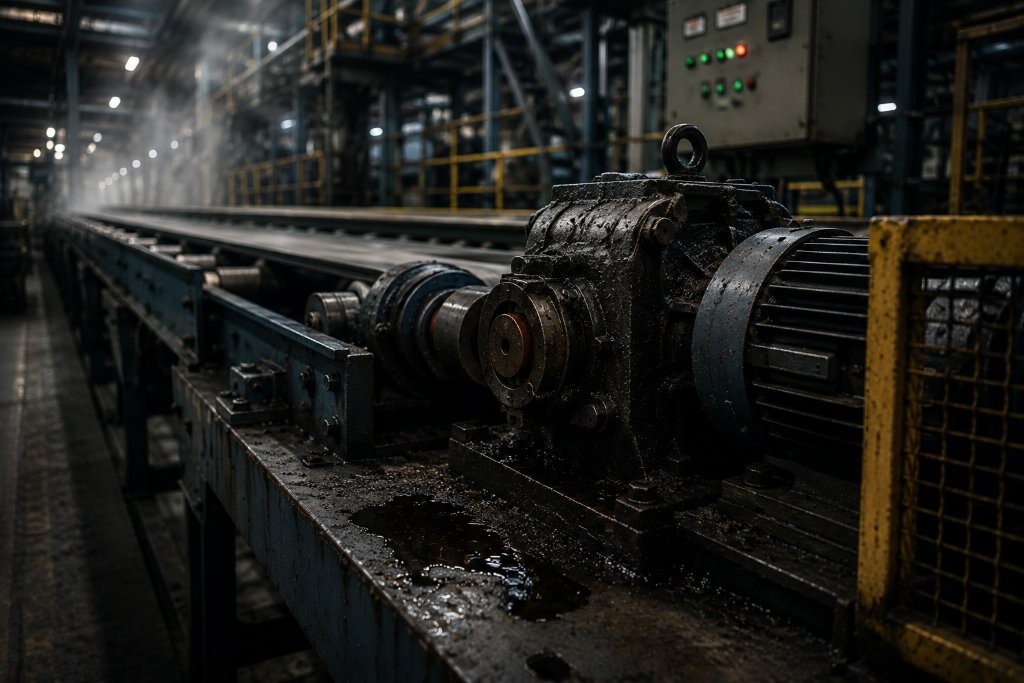
Abnormal noise, oil leaks, rising operating temperature
Drive failure, full conveyor shutdown, expensive component replacement
Rollers
Bearing seizure, shell wear, material buildup
Audible squealing, uneven rotation, visible material accumulation
Belt damage, fire risk from friction heat, reduced conveyor efficiency
Belts
Splice failure, edge fraying, tracking drift
Edge wear, visible cracking, recurring misalignment events
Belt tear, material loss, full replacement required in severe cases
Drives
V-belt wear, chain stretch, sheave damage
Slipping, noise, increased motor load
Loss of power transmission, sudden conveyor stoppage
Transfer Points
Impact wear, liner degradation, material buildup
Spillage, skirt board gaps, unusual impact noise
Product loss, housekeeping burden, downstream equipment damage
Reactive Maintenance vs. Predictive Maintenance
The difference in approach produces dramatically different operational outcomes over time.
Reactive Maintenance
Predictive Maintenance
How Continuous Conveyor Monitoring Improves Reliability
Wireless condition monitoring extends your team's visibility beyond what scheduled walkdowns or manual inspection rounds can realistically provide. By continuously tracking vibration, temperature, and operating conditions on critical conveyor assets, facilities gain something that reactive maintenance never offers: time to act before failure.
The practical value is not that monitoring replaces experienced maintenance personnel — it amplifies them. Your team makes better decisions when they have data showing a bearing temperature trending upward over three weeks rather than discovering it seized on a Tuesday morning.
Continuous vibration data reveals developing imbalance, misalignment, and bearing degradation patterns before they become failures.
Rising thermal signatures on motors and bearings often precede failure by hours or days, creating intervention windows that manual inspection rarely captures.
When readings cross defined thresholds, maintenance teams receive immediate notification — regardless of time of day or shift coverage.
Over time, accumulated data builds equipment-specific baselines that make anomalies easier to detect and maintenance planning easier to justify.
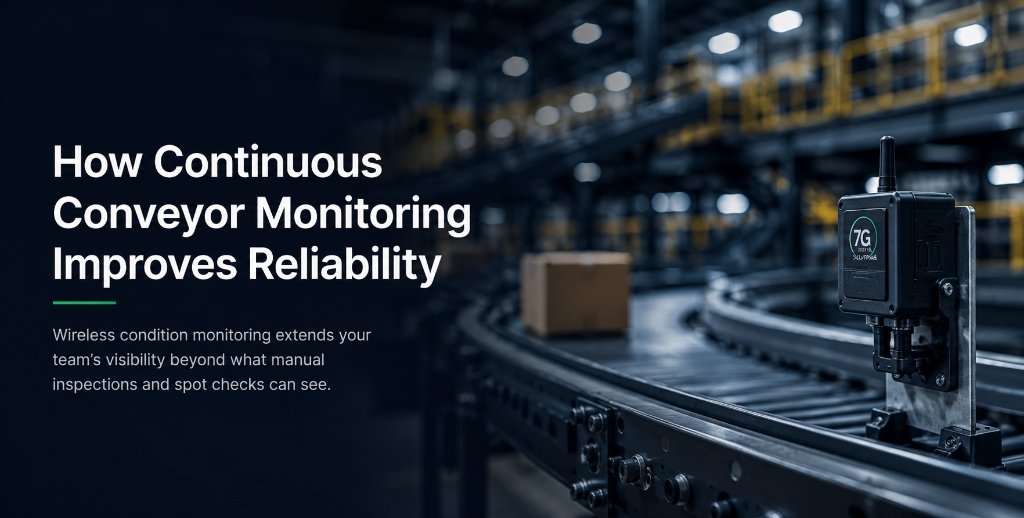
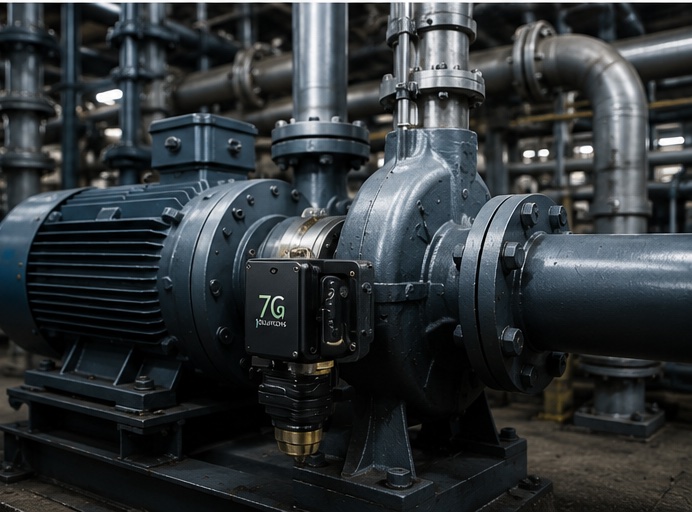
Wireless sensors provide continuous visibility into conveyor health — without interrupting operations.
A Simple Conveyor Reliability Strategy Facilities Can Implement Immediately
You do not need a large capital budget to begin improving conveyor reliability. The following framework is something any maintenance team can implement with existing resources.
Identify Your Five Most Critical Conveyors
Which conveyors, if failed, would cause the most operational disruption? Start there. Not every asset carries equal risk — prioritize the ones that would stop operations, delay shipments, or idle the most downstream processes.
Document Failure Consequences
For each priority asset, write down what would happen if it failed today. How long would recovery take? What would stop? What labor would be disrupted? This exercise clarifies risk and builds internal justification for reliability investment.
Establish Weekly Walkdown Routines
Assign consistent walkthroughs for priority conveyors. Consistency matters more than complexity — the same person, on the same day, listening and observing the same way, builds meaningful pattern recognition over time.
Log Every Observation
Sound, heat, vibration, belt tracking, lubrication condition, and recurring problems — log them all with dates. A pattern visible across multiple weeks is far more informative than any single observation.
Review Patterns Monthly
Set aside time each month to review the past four weeks of observations. Are any issues recurring? Are any trends worsening? Monthly review converts individual data points into actionable reliability intelligence.
Prioritize Repeat Issues
Any issue that shows up across three or more consecutive inspections should trigger a planned maintenance response before it becomes a downtime event. Repetition is the strongest indicator that a failure is developing.
This framework doesn't require sensors, software, or capital approval. It requires discipline, documentation, and consistency. For facilities where critical conveyor failures are frequent or operationally costly, the next step is typically adding continuous monitoring to the assets where manual inspection alone isn't enough.
Industries Where Conveyor Reliability Is Mission Critical
Conveyor downtime affects different environments in different ways — but the operational pressure is consistent across all of them.
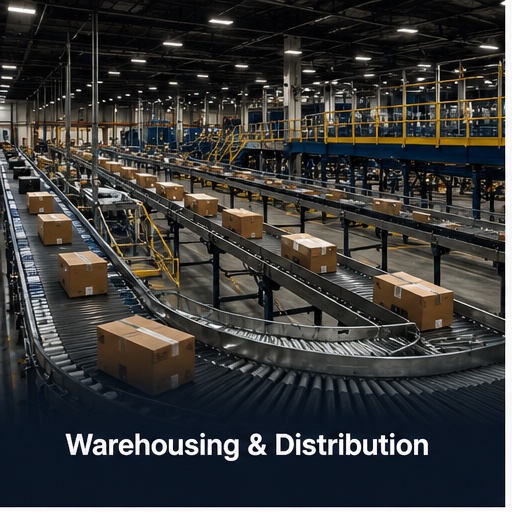
Warehousing & Distribution
In high-velocity distribution environments, conveyor uptime directly determines order fulfillment rates. A single sorter or takeaway conveyor failure during peak hours can halt thousands of packages and trigger late delivery penalties across entire shipping lanes.

Airports & Baggage Handling
Baggage system failures cascade immediately into missed connections, delayed aircraft, and significant passenger disruption. Continuous monitoring of baggage conveyor drives, bearings, and transfer points supports the 24/7 reliability airports require.

Food Processing
In food and beverage operations, conveyor downtime carries both production and food safety implications. Unplanned stoppages interrupt product flow, create contamination risk, and can compromise temperature-controlled product integrity.
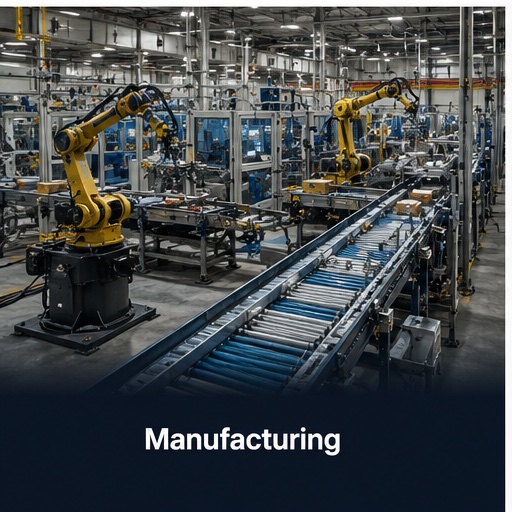
Manufacturing
Assembly and production conveyors tie together entire manufacturing processes. A single conveyor failure can stop a full production line, idle downstream work cells, and cascade into missed production targets within minutes.

Parcel & Logistics
Parcel sortation systems operate at high speed and high volume with minimal tolerance for downtime. Sorter failures during peak periods result in immediate throughput loss, manual handling labor spikes, and service commitment failures.

Cement & Heavy Industrial
In cement plants and heavy industrial facilities, bulk material conveyors operate under extreme load and environmental stress. Failures here often involve significant cleanup, structural inspection, and extended repair cycles that can idle entire production areas.
Frequently Asked Questions
Common questions from maintenance managers, reliability engineers, and operations leadership.
Related Resources
Further reading for maintenance managers, reliability engineers, and operations leadership.
Operational visibility begins with knowing where downtime risk exists.
If conveyor reliability is critical to your operation, 7G Solutions can help identify where monitoring, visibility, and predictive maintenance may reduce unplanned downtime risk. No obligation — just a straightforward conversation about your operation.
Schedule A Discovery Call