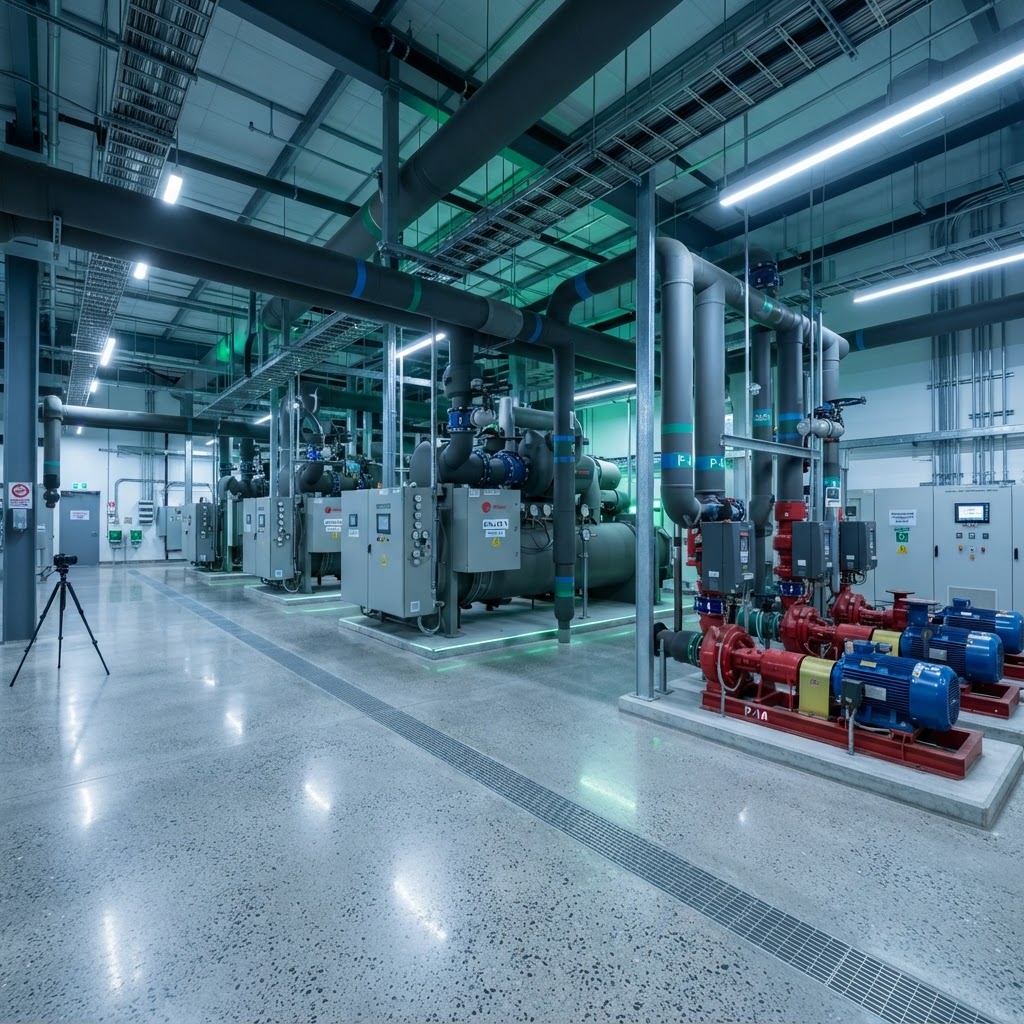
Reduce Waste. Improve Performance. Optimize Continuously.
7G helps facilities improve the performance of HVAC, lighting, controls and energy systems through automation, optimization and measurable operating intelligence.
Where facility performance drifts
Facility systems rarely fail suddenly — they drift. Energy use rises without a clear cause, controls stop optimizing, and teams lack a reliable baseline for measuring improvement.
- Energy use increases without a clear operational cause
- HVAC systems drift away from efficient operation
- Existing controls do not produce continuous optimization
- Building systems operate independently with limited visibility
- Facility teams lack a reliable baseline for measuring improvement
- Comfort and environmental performance are difficult to balance with energy cost
How 7G brings facility systems into continuous optimization
7G connects to the systems you already operate, establishes a clear baseline, and applies continuous optimization with measured, reconciled results — not one-time tuning.
- Integrate with your existing BAS and available plant data
- Establish a site-specific performance baseline
- Apply continuous optimization rather than static setpoints
- Measure and reconcile verified results over time
- Expand optimization across plants, zones and facility systems
Modernize Lighting. Improve Control. Verify the Result.
7G Solutions helps commercial, industrial and institutional facilities modernize lighting and lighting controls to reduce energy use, lower maintenance demands and improve how the facility responds to occupancy and operating schedules.
Our approach begins with the facility's operating requirements — not a particular fixture or controls manufacturer. We evaluate the existing lighting, controls, mounting conditions, operating hours and maintenance needs before recommending the appropriate modernization path.
LED Lighting Modernization
Upgrade aging fluorescent, HID or earlier-generation LED systems using properly selected commercial and industrial fixtures designed for the application.
Networked Lighting Controls
Apply occupancy sensing, scheduling, zoning, dimming and centralized control where the operational and financial value supports it.
Legacy Controls Evaluation
Evaluate existing lighting-control infrastructure and determine whether it should be retained, extended, repaired, integrated or replaced.
Multi-Site Standardization
Develop repeatable fixture, controls and installation standards that help multi-site organizations improve consistency, simplify maintenance and plan capital deployment.
Financial and Performance Analysis
Evaluate operating hours, energy consumption, maintenance exposure, project cost, available incentives where applicable and expected financial performance before implementation.
Turnkey Project Coordination
Coordinate appropriate products, qualified electrical contractors, installation requirements, commissioning and project closeout.
A Practical Path to Lighting Modernization
Assess the existing lighting, controls and operating requirements
Establish the current energy and maintenance baseline
Engineer the appropriate fixture and controls solution
Coordinate installation and commissioning
Verify performance and document the result
Standardize and expand where the demonstrated value supports it
7G evaluates facility requirements, existing infrastructure, mounting height and physical conditions, light-level requirements, operating hours, controls requirements, maintenance exposure, product warranty, project economics and multi-site standardization needs before selecting the appropriate technology and implementation approach.
7G does not self-perform electrical installation. For projects that require it, 7G coordinates qualified electrical contractors appropriate to the project and jurisdiction, along with installation requirements, commissioning and project closeout.
What changes for your operation
Representative capabilities
FACIL is a significant offering within Facility Intelligence. For qualified FACIL chilled-water projects, no capital investment is required; broader facility work may involve controls or sensor investment depending on scope.
A proof-of-value path, not a leap of faith
We start with the chilled-water plant or building system with the greatest energy-performance potential, then expand from verified results.
Identify the highest-value problem
Select the chilled-water plant or building system with the greatest energy-performance potential.
Deploy the appropriate technology
Connect FACIL to the existing BAS or instrument the target building systems — no new field hardware for qualified FACIL projects.
Establish the baseline
Document current energy use, plant efficiency and operating conditions.
Measure the result
Verify site-specific savings over a 30-day evaluation and reconcile measured performance.
Expand from demonstrated value
Extend optimization to additional plants, HVAC zones and facility systems.
Go deeper into facility intelligence
Chilled-Water Optimization (FACIL)
Reduce chilled-water plant energy through your existing BAS — no new field hardware for qualified plants.
ExploreEnergy Infrastructure Monitoring
HVAC, chilled water, motors and critical facility system reliability.
ExploreFacility Evaluation
Discuss a facility evaluation and a measurable path to verified energy savings.
ExploreExplore the other 7G pillars
Evaluate Your Facility
A structured 30-day evaluation establishes site-specific performance and verified savings — with no capital investment required for qualified FACIL projects.