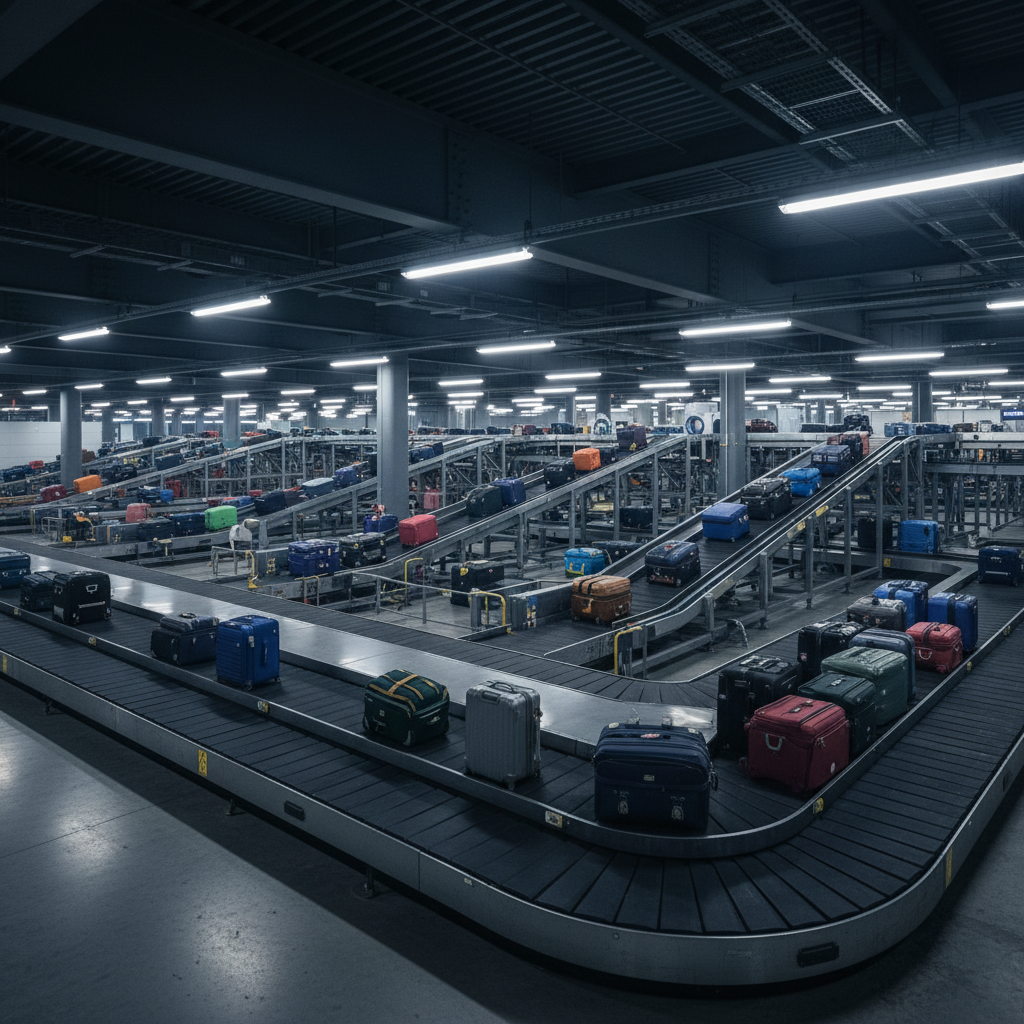
Modern airports operate on precision, timing, and continuous movement.
Behind every successful passenger experience is a highly coordinated infrastructure system working constantly in the background. One of the most operationally critical systems inside any airport is baggage handling.
While travelers typically only see the check-in counter and baggage carousel, airports rely on extensive conveyor networks operating across terminals, tunnels, sortation systems, screening areas, and aircraft loading operations. These systems often run continuously for long operating windows under heavy daily demand.
When baggage handling systems fail, the operational consequences escalate quickly.
Conveyor Downtime Inside Airports Creates Immediate Operational Disruption
Unlike many industrial environments where downtime may impact production schedules over hours or days, airport baggage failures create almost immediate operational consequences.
A single conveyor or sorter failure can lead to:
- Delayed aircraft departures
- Missed baggage transfers
- Passenger disruption
- Gate delays
- Manual baggage handling labor spikes
- Cascading operational bottlenecks
- Customer dissatisfaction
- Increased staffing pressure
In major airports processing thousands of bags per hour, even short periods of downtime can create operational backlog that takes hours to recover from.
The challenge becomes even more significant during:
- Peak travel periods
- Weather events
- High-volume holiday schedules
- International transfer windows
- Overnight sorting operations
Operational continuity is critical because baggage systems are tightly interconnected. A problem in one section often impacts upstream and downstream operations almost immediately.
Most Baggage Conveyor Failures Begin Before The Shutdown
Like most rotating equipment systems, baggage handling failures rarely occur without warning.
In many cases, developing issues appear gradually through:
- Increasing vibration
- Conveyor overheating
- Abnormal motor noise
- Belt tracking inconsistencies
- Roller degradation
- Bearing temperature rise
- Drive system strain
- Intermittent transfer jams
The difficulty is that many airport systems operate continuously across large physical footprints. Manual inspections alone often struggle to provide sufficient visibility into developing problems.
By the time a failure becomes operationally obvious, disruption has already begun.
For a detailed overview of the specific indicators that precede mechanical failure in conveyor systems, see: 5 Early Warning Signs of Conveyor Bearing Failure.
Airport Conveyor Systems Operate In Extremely Demanding Conditions
Airport baggage systems present unique reliability challenges because they combine:
- High throughput
- Continuous operation
- Complex routing logic
- Long conveyor distances
- Multiple elevation changes
- High motor counts
- Distributed mechanical infrastructure
Many systems also operate in constrained maintenance windows where downtime opportunities are limited.
Operational pressure is especially high in:
- Transfer hubs
- International terminals
- TSA screening integration areas
- High-speed sortation zones
- Aircraft loading systems
These environments place significant stress on:
- Motors
- Bearings
- Gearboxes
- Transfer points
- Conveyor drives
- Pulleys and rollers
Even minor degradation can eventually create larger operational disruption if not identified early. To understand the full financial impact of these failures, see: Why Conveyor Failures Cost More Than Most Facilities Realize.
Why Predictive Monitoring Is Becoming Increasingly Important
Many airports are moving toward predictive maintenance and continuous operational visibility to improve reliability and reduce unplanned downtime risk.
Wireless monitoring technologies now allow maintenance and operations teams to observe:
- Vibration trends
- Bearing temperature
- Motor health
- Operational anomalies
- Runtime behavior
- Equipment degradation patterns
This allows teams to identify developing mechanical issues before they create baggage handling disruption.
Instead of reacting to failures after stoppage occurs, facilities can increasingly plan maintenance interventions during controlled service windows.
This shift helps:
- Improve uptime
- Reduce emergency maintenance
- Improve staffing efficiency
- Reduce passenger disruption
- Increase operational confidence
For a broader look at the compounding costs of unplanned downtime across industrial operations, see: The Hidden Operational Cost of Unplanned Equipment Downtime.
A Practical Reliability Strategy Airports Can Implement Immediately
Even without deploying new technology, airports can improve conveyor reliability by increasing operational visibility around critical baggage infrastructure.
One effective approach is identifying:
- The most operationally critical conveyor zones
- The highest throughput transfer points
- Conveyors with recurring service history
- Motors operating under continuous load
- Systems with minimal maintenance access windows
Maintenance teams can then establish structured observation routines focused on:
- Heat
- Vibration
- Abnormal acoustics
- Recurring jams
- Belt tracking behavior
- Lubrication condition
- Motor loading behavior
Over time, tracking these observations often reveals repeat patterns that help teams identify developing problems earlier.
For a comprehensive framework covering conveyor monitoring approaches, failure point identification, and reliability strategies, see: Conveyor Monitoring & Reliability.
Operational Reliability Directly Impacts Passenger Experience
Passengers may never see the conveyor systems operating beneath terminals, but baggage infrastructure plays a major role in the overall airport experience.
Reliable baggage handling supports:
- On-time departures
- Smoother transfers
- Reduced baggage loss
- Improved operational flow
- Reduced labor disruption
- Higher passenger confidence
As airports continue modernizing operations and increasing throughput expectations, conveyor reliability is becoming increasingly tied to overall operational performance.
The airports that improve visibility into critical baggage infrastructure are often the ones best positioned to reduce disruption before it impacts operations.
Operational Visibility Helps Airports Reduce Disruption Before It Starts
7G Solutions helps facilities improve conveyor reliability and operational visibility across mission critical infrastructure environments.
Schedule A Discovery Call