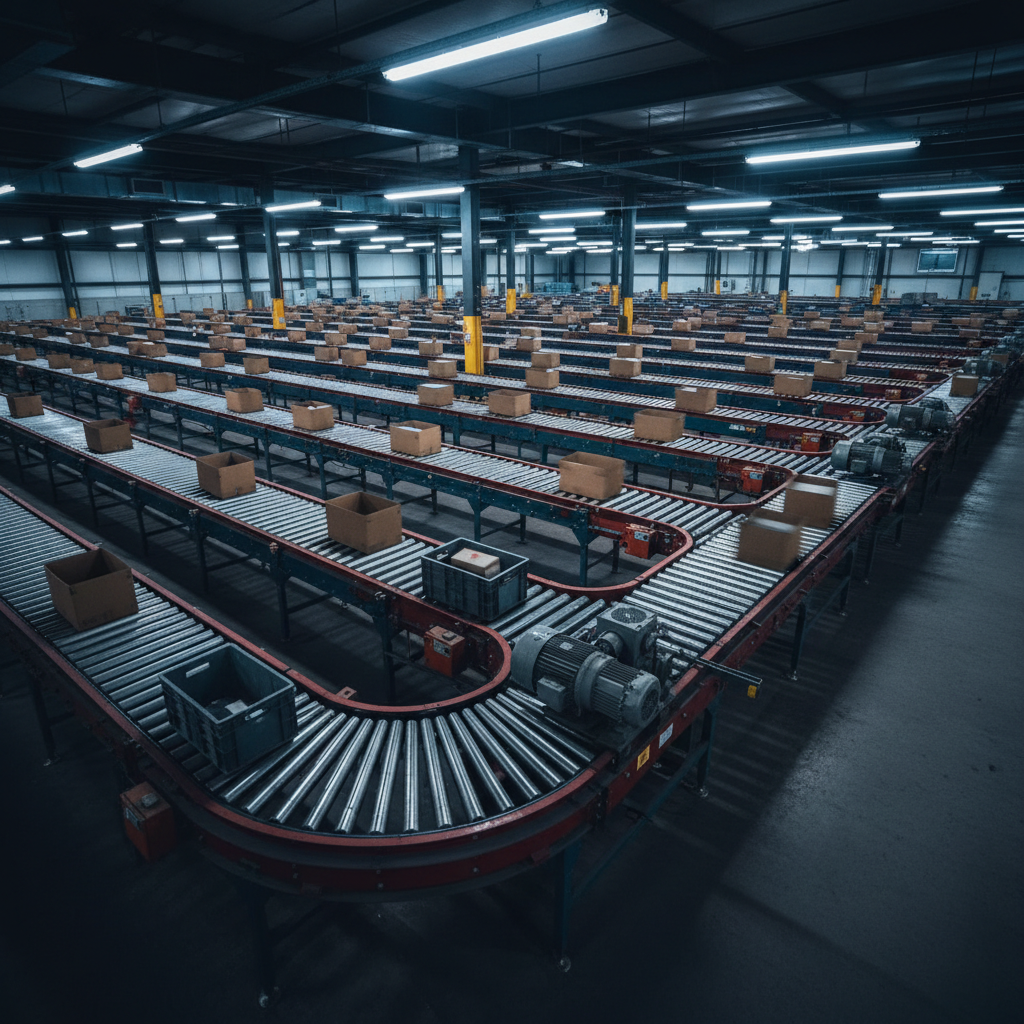
How operational intelligence is helping organizations make smarter decisions across industrial, commercial, and public environments.
For years, predictive maintenance has focused on one objective: preventing equipment failures before they occur.
Motors. Bearings. Conveyors. Gearboxes.
And while those applications continue to deliver tremendous value, a new opportunity is emerging.
The same sensor technologies that help organizations predict mechanical failures can also provide real-time visibility into how people move through facilities, how spaces are utilized, and where operational inefficiencies exist.
In other words, the future of operational intelligence extends well beyond the machine itself.
A New Way of Thinking
Traditionally, many operational activities have been managed according to schedules and assumptions.
Equipment inspections occur every month.
Restrooms are serviced every two hours.
HVAC systems run according to predefined schedules.
Staffing levels are established based on historical averages.
While these approaches have worked for decades, they often result in resources being deployed inefficiently. Some areas receive attention when it isn't needed, while others experience periods of heavy demand before assistance arrives.
The missing ingredient has been visibility.
Organizations have lacked the ability to understand what is actually happening in real time.
Today, that is changing.
A Real-World Example
Consider a major airport.
Historically, restroom cleaning schedules may have been based on fixed intervals regardless of passenger volume. Yet anyone who has traveled knows that traffic fluctuates dramatically throughout the day.
By utilizing occupancy and traffic sensors, airport operators can understand which facilities are experiencing the highest usage and prioritize cleaning resources accordingly.
The result is a cleaner environment, better utilization of labor resources, and an improved experience for travelers.
This same principle can be applied across countless industries.
Measure activity.
Generate insight.
Respond based on actual conditions.
One Platform. Endless Possibilities.
Manufacturing
Industrial organizations have long embraced predictive maintenance to reduce unplanned downtime. But operational intelligence can extend well beyond equipment health.
Applications include:
- Predicting failures on conveyors and rotating assets
- Understanding pedestrian traffic patterns to support safety initiatives
- Identifying operational bottlenecks
- Improving allocation of maintenance resources
- Supporting data-driven continuous improvement efforts
Commercial Offices
As organizations reevaluate how office space is utilized, occupancy insights are becoming increasingly valuable.
Applications include:
- Conference room utilization analysis
- Demand-based cleaning schedules
- HVAC optimization based on occupancy patterns
- Improved workplace experience initiatives
- More informed space planning decisions
Retail Environments
Retail leaders are constantly seeking ways to improve both customer experience and operational efficiency.
Applications include:
- Customer traffic analytics
- Peak period staffing optimization
- Queue monitoring and service improvements
- Understanding customer movement patterns
- Prioritizing cleaning and support resources
Healthcare Facilities
Healthcare organizations face constant pressure to improve service levels while managing limited resources.
Applications include:
- Waiting area occupancy monitoring
- Environmental services prioritization
- Patient flow insights
- Improved resource deployment
- Enhanced operational efficiency
Distribution and Logistics
Distribution centers thrive on efficiency and throughput.
Applications include:
- Identifying congestion points
- Understanding workforce movement patterns
- Supporting safety initiatives
- Optimizing labor deployment
- Improving operational visibility
The Shift from Scheduled to Smart
For decades, organizations have asked:
"Did we follow the schedule?"
Increasingly, they are asking a different question:
"Did we respond to actual conditions?"
This shift represents a fundamental change in how organizations operate.
Instead of relying solely on assumptions and historical patterns, leaders can make decisions based on real-world activity occurring within their facilities.
The result is improved efficiency, better experiences, reduced waste, and more effective use of resources. To understand the financial impact of operating reactively, see our analysis of the hidden operational cost of unplanned equipment downtime.
The Future of Operational Intelligence
At 7G Solutions, we believe the next generation of operational excellence will be driven by actionable insights derived from real-world conditions.
Whether monitoring critical industrial assets, understanding occupancy patterns within commercial facilities, or helping organizations deploy resources more effectively, the goal remains the same:
Provide the right information at the right time to enable better decisions.
Predictive maintenance will continue to play an essential role in reliability programs. Organizations looking to go deeper on conveyor reliability can explore early signs of conveyor bearing failure and why conveyor failures cost more than most facilities realize.
But organizations willing to embrace a broader view of operational intelligence will uncover new opportunities to improve efficiency, reduce waste, enhance experiences, and create lasting competitive advantages.
The future isn't simply about knowing when a machine might fail.
It's about understanding how your entire operation performs and using that knowledge to operate smarter every day.
Frequently Asked Questions
What is operational intelligence?
Operational intelligence is the use of real-time data and analytics to understand what is actually happening within a facility or operation, enabling organizations to make faster, more informed decisions based on actual conditions rather than schedules or assumptions.
How is operational intelligence different from predictive maintenance?
Predictive maintenance focuses on anticipating equipment failures before they occur. Operational intelligence extends that concept to encompass all aspects of facility performance — including occupancy patterns, resource utilization, traffic flow, and operational efficiency — using the same underlying sensor and analytics technologies.
Which industries can benefit from operational intelligence?
Operational intelligence delivers value across manufacturing, commercial real estate, retail, healthcare, distribution and logistics, airports, and transportation hubs. Any organization that manages facilities, equipment, or people can benefit from real-time visibility into operational conditions.
Can operational intelligence help reduce costs?
Yes. By enabling organizations to respond to actual conditions rather than following fixed schedules, operational intelligence helps reduce wasted labor, minimize unplanned downtime, lower emergency repair costs, and improve the allocation of maintenance and operational resources.
Interested in exploring how operational intelligence can improve your organization?
Whether your goals involve reducing unplanned downtime, optimizing facility operations, improving safety, or gaining deeper visibility into your processes, 7G Solutions can help.
Contact us to learn how our pilot-driven approach can uncover new opportunities for efficiency and performance.
Contact 7G Solutions