HeavyIndustrial
Operational visibility and predictive monitoring for rugged mission critical industrial infrastructure.
Heavy Industrial Operations Depend On Conveyor Reliability Under Extreme Conditions
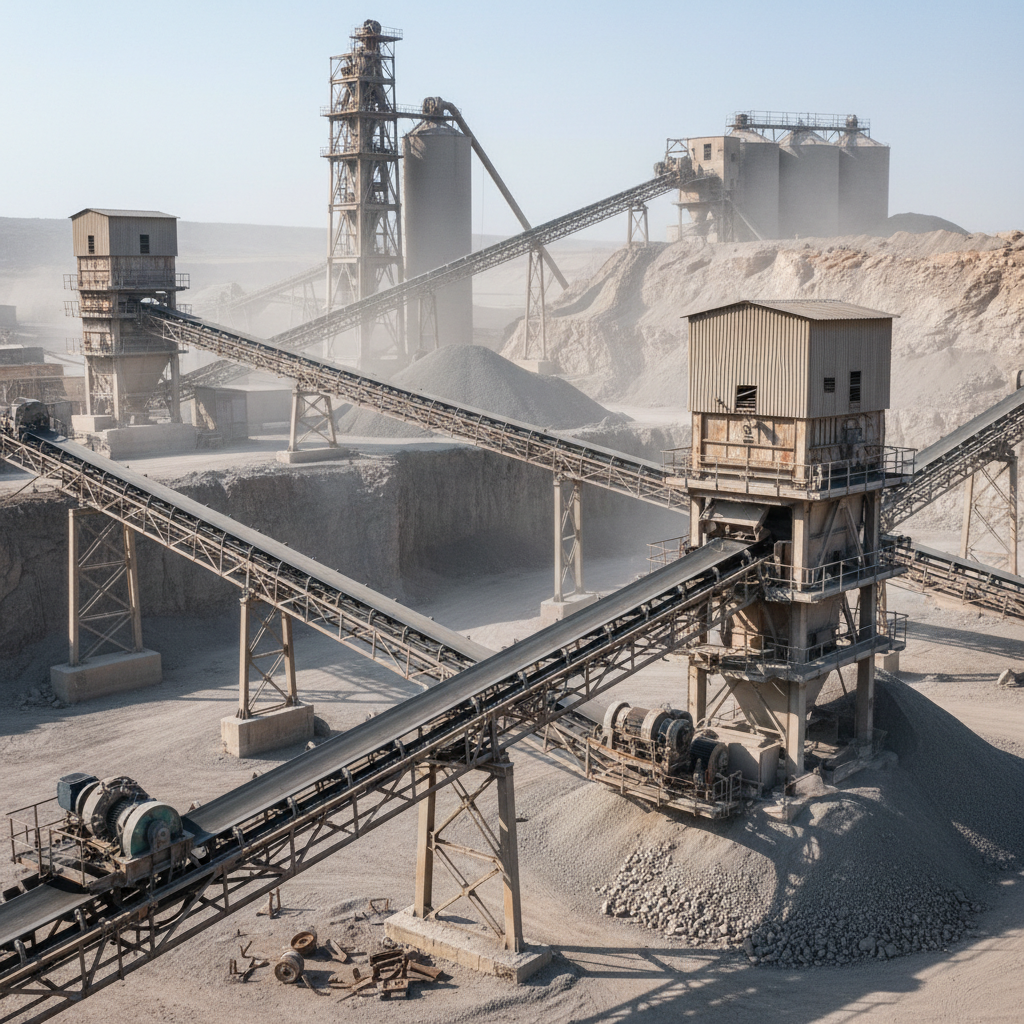
Cement plants, aggregate processing facilities, mining operations, and bulk material handling sites depend on conveyor systems as their primary production infrastructure. These systems often operate continuously across large distances, moving high-volume material loads under demanding mechanical stress.
In heavy industrial environments, equipment degradation is accelerated by abrasive materials, dust infiltration, thermal cycling, high belt tension, and limited lubrication access. Failures that might be manageable in lighter environments can escalate rapidly here.
Most failures develop gradually through increasing vibration, rising temperatures, and changing mechanical behavior — indicators that continuous monitoring can detect before catastrophic failure occurs.
Operational Impact of Conveyor Failure
Why Heavy Industrial Environments Present Extreme Reliability Challenges
Heavy industrial conveyor infrastructure operates under conditions that accelerate equipment wear, limit maintenance access, and make reactive maintenance strategies increasingly costly to sustain.
Abrasive Material & Dust Exposure
Cement, aggregate, and mining operations subject conveyor systems to continuous abrasive material contact and heavy dust infiltration that accelerates bearing and seal degradation.
Remote & Distributed Infrastructure
Large conveyor networks spanning significant distances make manual inspection coverage unreliable. Many critical assets operate with minimal direct observation between service intervals.
Continuous Runtime Environments
Heavy industrial operations often run continuously with very limited planned downtime windows. Any unplanned stoppage immediately impacts production output and throughput targets.
Excessive Mechanical Loading
High belt tension, heavy material loads, and demanding start/stop cycles place sustained mechanical stress on motors, bearings, pulleys, and drive systems across the conveyor network.
Monitoring Across Large-Scale Industrial Conveyor Infrastructure
Wireless monitoring can be deployed non-invasively across all critical components in a heavy industrial facility — including remote and elevated infrastructure — without requiring production shutdowns or complex installation procedures.
Operational Visibility Designed For Harsh Industrial Infrastructure
Wireless condition monitoring provides continuous insight into the health of critical industrial equipment without disrupting production operations or requiring access to remote infrastructure during operation.
Vibration Monitoring
Continuous triaxial vibration sensing detects early bearing wear, motor imbalance, pulley eccentricity, and mechanical looseness across high-load industrial conveyor systems.
Thermal Detection
Surface temperature monitoring identifies heat signatures on motors, gearboxes, and bearing assemblies associated with lubrication failure, overloading, and accelerating mechanical wear.
Trend Analytics
Long-term condition trending establishes equipment baselines across distributed infrastructure and automatically flags deviations, enabling proactive maintenance during planned shutdown windows.
Alert Management
Configurable alert thresholds notify maintenance teams when critical equipment condition crosses defined parameters — prioritizing the most production-critical assets across large facilities.
What Improved Conveyor Visibility Delivers For Heavy Industrial Operations
When maintenance teams can identify developing problems earlier, they gain the ability to plan interventions during planned shutdown windows rather than scrambling to respond to catastrophic failures mid-production.
Detection possible days or weeks before catastrophic failure through vibration and thermal monitoring
Wireless monitoring provides visibility into infrastructure that is physically difficult to access during operation
Wireless sensor installation requires no production shutdowns or conveyor modifications
Steps Heavy Industrial Facilities Can Implement Immediately
Improving reliability does not always require new technology. These practical actions help maintenance teams build better visibility into equipment condition and reduce reactive maintenance exposure across large industrial facilities.
Identify The Most Critical Conveyors
Map which conveyors, if stopped, create the largest production bottleneck. These assets warrant the highest monitoring priority.
Document Repeat Failure Points
Track recurring maintenance calls, bearing replacements, and mechanical failures by asset. Patterns often reveal chronic underlying issues.
Weekly Operational Walkdowns
Conduct structured weekly inspections focused on heat, vibration, unusual sounds, belt tracking behavior, and transfer point condition across key assets.
Lubrication Inspection Discipline
Establish and enforce regular lubrication inspection routines. Most bearing failures in heavy industrial environments are lubrication related.
Related Resources
Technical guides relevant to heavy industrial conveyor reliability.
Operational Visibility Helps Heavy Industrial Facilities
Reduce Downtime Risk
7G Solutions helps facilities improve conveyor reliability, predictive maintenance visibility, and operational continuity across mission critical industrial infrastructure.