When Reliability Is a Matter of Life
Most industrial facilities manage equipment failures as operational disruptions — costly and inconvenient, but ultimately recoverable. For public aquariums and marine research institutions, a life support system failure is categorically different. The pumps, filtration systems, and circulation infrastructure that maintain water quality, temperature, and oxygenation for aquatic collections are not simply operational assets. They are the biological foundation upon which thousands of living specimens depend.
A life support pump failure that goes undetected for even a few hours can initiate rapid deterioration of water conditions across entire exhibit systems. The consequences extend from the irreplaceable loss of rare and sensitive species to substantial financial damage from collection devaluation, emergency intervention costs, and the reputational impact of a high-profile system failure.
In this environment, predictive monitoring is not a cost optimization strategy — it is a risk management imperative.
The Architecture of Aquarium Life Support Systems
Modern public aquariums operate complex, multi-system life support infrastructures that must maintain precise environmental conditions across dozens or hundreds of individual exhibits, each with its own biological requirements. Primary circulation pumps move large volumes of water continuously through filtration, heating, chilling, and oxygenation systems before returning treated water to exhibit environments.
The engineering challenge is significant: these systems must operate continuously — 24 hours a day, 365 days a year — without the maintenance windows that allow most industrial facilities to take equipment offline for inspection and service. Access to pump systems during normal operations is often constrained by the need to avoid disturbing exhibit environments and the animals within them.
This operational profile — continuous duty, limited access, zero tolerance for failure — makes aquarium life support pumps ideal candidates for wireless condition monitoring.
Critical Failure Modes in Life Support Pump Systems
Bearing Degradation
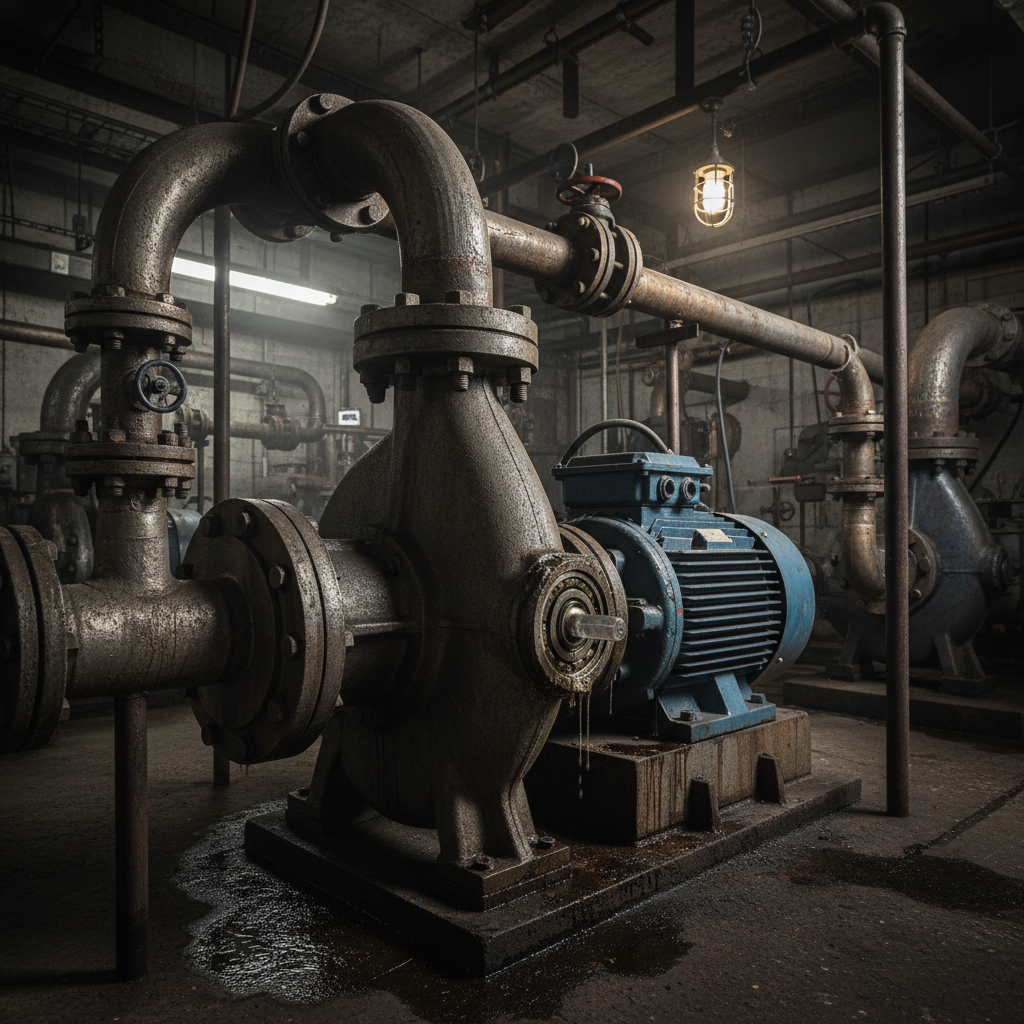
As with all rotating equipment, bearings represent the most common failure point in life support circulation pumps. The consequences of bearing failure in this context are particularly severe because backup capacity may be limited and the time required to detect, diagnose, and respond to a failure can be measured against the tolerance of sensitive biological systems.
Wireless vibration monitoring on pump bearing housings provides continuous tracking of bearing defect frequencies, enabling maintenance teams to detect developing bearing degradation weeks before catastrophic failure — providing the time needed to plan and execute a replacement during a scheduled maintenance window.
Seal and Gasket Failures
Life support pump seals are subjected to continuous mechanical stress in corrosive saltwater environments. Seal degradation that leads to leakage can introduce contaminants into exhibit water systems, threatening water quality independently of the pump's continued mechanical operation. Vibration monitoring can detect the increased shaft runout and bearing loading that often precedes seal failure.
Impeller Wear and Fouling
Biological fouling, particulate accumulation, and gradual impeller wear alter pump hydraulic performance over time, reducing flow rates and increasing motor loading. Continuous monitoring of motor current draw and vibration signatures can identify developing hydraulic performance degradation before it impacts exhibit water conditions.
Motor Thermal Events
Life support pump motors operating in humid mechanical room environments are subject to thermal stress from both mechanical inefficiency and elevated ambient temperatures. Continuous temperature monitoring identifies developing thermal anomalies that may indicate lubrication breakdown, overloading, or the early stages of electrical insulation degradation.
The Monitoring Solution: Wireless, Non-Invasive, Continuous
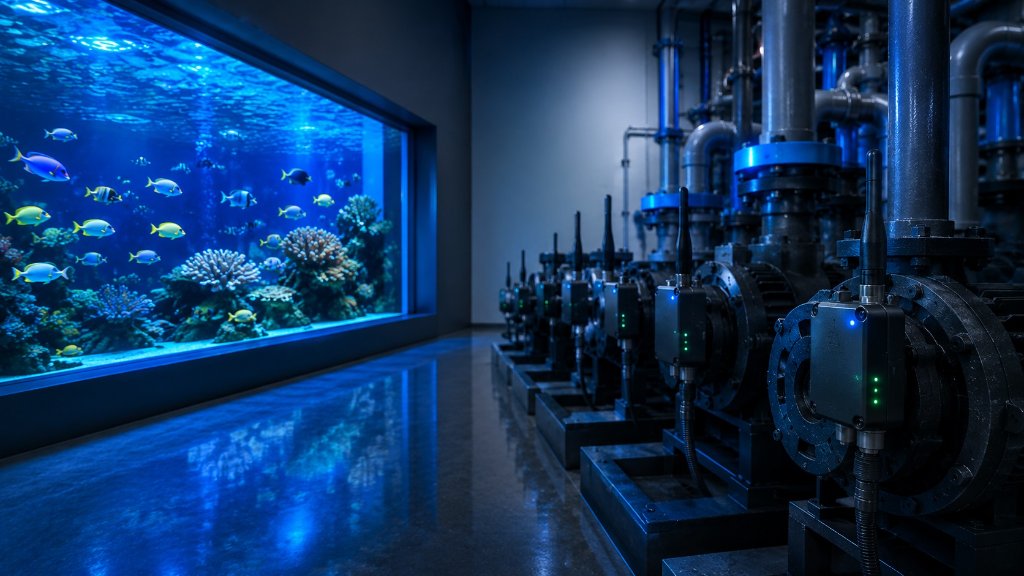
The operational constraints of aquarium life support infrastructure make wireless monitoring technology particularly well-suited to this application. Wireless sensors can be installed on operating pump systems without requiring system shutdown or modification of existing plumbing and electrical infrastructure. Once installed, they operate continuously and communicate data to cloud-based analytics platforms without requiring physical access to the monitored equipment.
For aquarium operations teams, the practical advantages are significant:
- No production downtime required for sensor installation
- Continuous monitoring eliminates the gaps between periodic manual inspections
- Remote access to pump health data from anywhere in the facility or off-site
- Automated alerting when anomalies develop, enabling rapid response
- Historical trending data that supports long-term asset management planning
Regulatory and Accreditation Implications
Public aquariums accredited by the Association of Zoos and Aquariums (AZA) and similar organizations are subject to standards that include requirements for animal welfare infrastructure, veterinary care protocols, and life support system reliability. Documented predictive monitoring programs provide evidence of proactive animal care practices that support accreditation requirements and demonstrate institutional commitment to the highest standards of aquatic animal welfare.
A Model for Mission-Critical Reliability
The aquarium application illustrates a broader principle: the value of predictive monitoring is highest in environments where the consequences of failure extend beyond financial impact. Whether the critical asset is a life support pump serving a marine collection, a circulation system maintaining process integrity in pharmaceutical manufacturing, or a cooling pump protecting sensitive electronics infrastructure, the fundamental calculus is the same.
Continuous wireless monitoring transforms the maintenance paradigm from reactive response to proactive protection — ensuring that the individuals responsible for these critical systems have the visibility they need to intervene before failure occurs, not after.